Episode Transcript
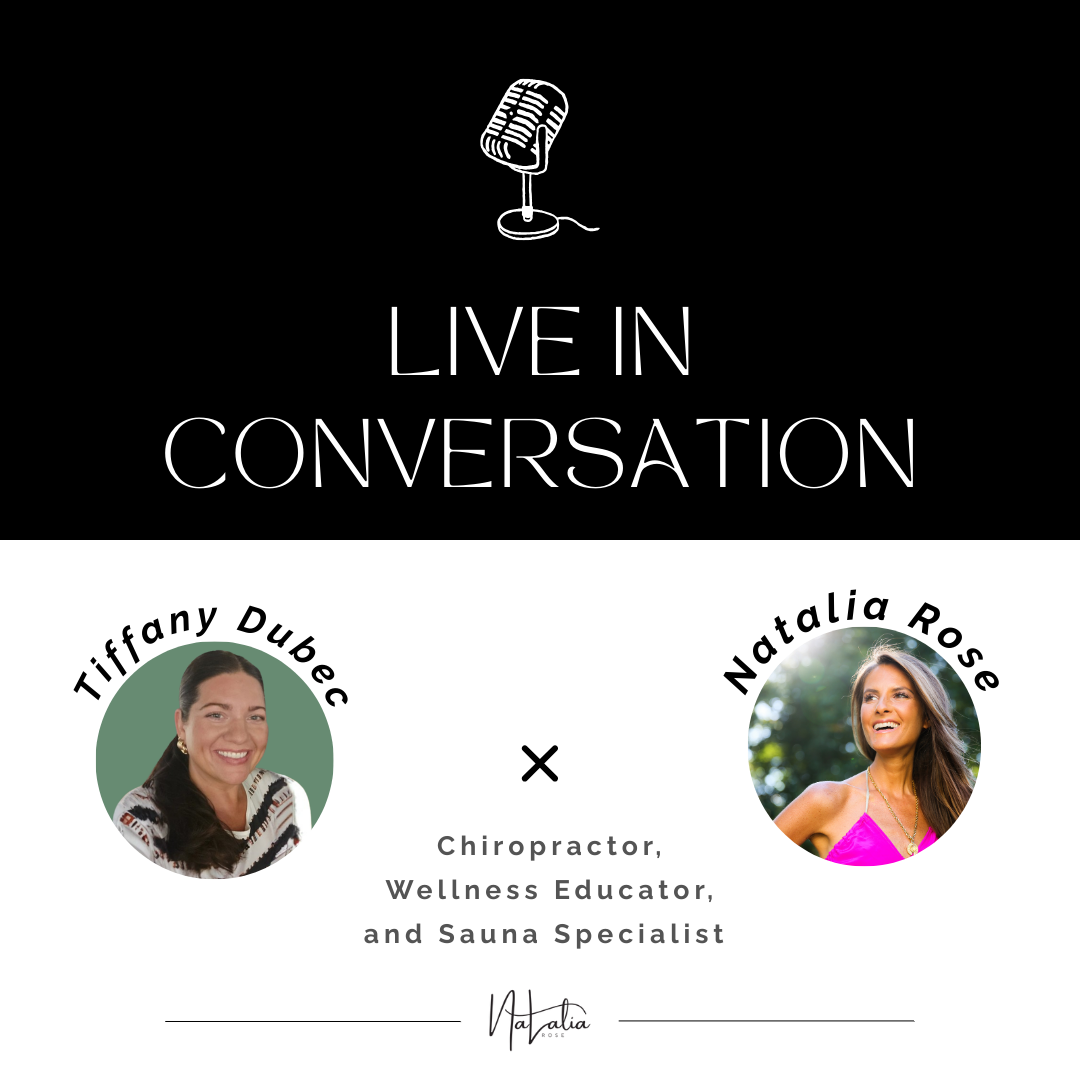
[00:00:00] Speaker A: Today I'm so excited to be here with Tiffany Dubeck from High Tech Health. Tiffany Dubeck is the product specialist, practitioner director and educator at High Tech Health. And I have so many questions for you because I have been loving my High Tech Health infrared sauna for over 15 years and I just got a new one. I can't.
I am like the happiest person on the block around here. I literally just have had it assembled the other day and I have not been able to stay out of it.
So beautiful. The new model, I mean, I loved my old one, which was with, like I said, For 15 years it traveled all over the world with me. It made the cross hemisphere journey twice. It moved from, must have moved into, from like around five different houses from New York City apartments to houses in South Africa back to Florida. I mean it's been everywhere and it has been absolutely perfect. And anytime I ever had an issue, I would call High Tech Health and they would fix it. And in a blink, no hurdle was too high. I always felt so cared for and it made such a difference because I even had a point person there that I could call. I just knew, you know, whatever the issue would be. So when it came time to get a new one, there was no question in my mind which one it was going to be because I knew also not only was I going to have the best possible customer service, but I didn't have to worry about the quality of the wood, the glue, the infrared frequency. Like everything was going to be research to the hilt. It was going to be the best of the best. And I just had to go to there's a one stop shop. I knew exactly what to do and I couldn't be happier. And I have to say that aesthetically my new model is gobsmackingly jaw droppingly beautiful.
So elevates the space. You know, people think, oh, do you know, do I have the space to put this. It elevates the space. It makes you feel like you're living in a spa. And it's, it's artistic, especially as you got the red light there and this one. And I've been playing with the lights because in my new model I got the smart, the new smart one, the smart one.
So I actually can change the lights. I can. Today I did blue light, yesterday I did red light. I'm going to play with the yellow light, the orange light. I mean, there's a whole spectrum of the lights that we can use. So I've got the questions for you. As you can see, I'm like over, like overjoyed and also over with questions too. So one of the things I think I'd love to start with is the idea of near infrared versus far infrared and the difference between infrared wave frequency and red light and how you guys have incorporated these within the high tech health saunas and where it's kind of gone, where it's come from, maybe where it's going. But most importantly, what is the difference? What are we talking about here with all these lights and waves?
[00:02:49] Speaker B: Definitely, yeah, that's, that's a great distinction to make because so many people are confused about it and there's so much information out there.
So they're all different wavelengths of light that we get from the sun.
So it's about trying to harness that in the way that would help the body, you know, mimic that. All the benefits that you're getting from the sun into a sauna.
Now, far infrared, that's the longest wavelength, that's the longest spectrum of light. The, that is what's always been associated with far or infrared saunas. So it's usually far infrared. That's where the past 40 or 50 years of documented published research, it's all been studied on far infrared only in a sauna. That's what creates that thermal heat response. That's what's raising your core body temperature and jumpstarting all of the healing benefits. With near infrared, that's shorter wavelengths, still invisible light from the sun, and it has a completely separate chemical reaction in the body.
So near infrared paired with red light is usually what people know as red light therapy. That's what those red light therapy devices, handheld devices, or the panels that you get. Sometimes it's added into a sauna. What you're going for there is photobiomodulation, pmbt and this, it has more specific parameters of how it works. So it's not really, it's not heating the body, you're not getting that thermal response, but you're getting more of that superficial benefits. It can help with, you know, skin health, it can help with decreasing the wrinkles and everything, help decreasing inflammation. Really good for acute injuries, mitochondrial health, things like that. So the problem with adding that into a sauna is that because red light therapy or for the conversion to photobiomodulation, for that to actually take place, it requires those specific parameters. It's all based upon a certain amount of output of the rays, a certain amount of absorption. The body, there's evidence that shows that the body shouldn't actually be very heated for that conversion to take place. Regularly and effectively.
And so a lot of times you're not actually getting the benefits that you're expecting. That's correlated with the research when you're having red light therapy in the sauna. So it's different from the chromotherapy lighting that we have in our sauna that you see the red lights on.
This is a, like LED or like the laser lights are associated with that. A lot of times when you put that in a sauna, you're actually, you know, it's not that same power output. The, the dosage and strength is different. The distance to the body that you know that it needs to be to have those, to get those benefits. You're just not getting that.
So I always tell people it's better to have a separate device for that. Let the far infrared. You want the infrared sauna to be far infrared only. That's the true workhorse. That's where you're getting the vast systemic benefits. You know, cardiovascular health, huge detox, decreasing pain and inflammation. So you're getting a lot of those great benefits that you would even get from red light therapy. You know, the, the skin benefits. You're getting that as well in the far infrared sauna, plus many additional benefits. So it's better to do the sauna and then separately have a red light device that can actually give you the benefits that you're expecting.
[00:06:28] Speaker A: But you are getting something from the, the light therapy as well. You think there's something coming through which.
[00:06:34] Speaker B: You can get from the chromotherapy or.
[00:06:36] Speaker A: From the red light devices, the chromotherapy in the infrared sauna.
[00:06:41] Speaker B: So the chromotherapy in here is we have pure red light along with other primary, all the other primary colors.
And there are, there's a great article that we have on our website that talks about the different benefits. And a lot of people think it's just for like mood and ambiance. But there's some, you know, light therapy is, is real. So the red light is able to affect your mood. Your circadian rhythm helps with, you know, balancing your nervous system. So it's also a complementary therapy in there, different from red light therapy with near infrared. So we don't have any of the near infrared, which can actually be harmful in certain instances, but the red light is very, very beneficial. But it is different than red light therapy, red and near infrared, that needs to be close up to the skin for it to be really effective.
[00:07:36] Speaker A: Got it, got it. And can you, can you share about the difference? I think it's really helpful for the audience to know the difference between a regular sauna and an infrared sauna. How it heats differently, why the temperature feels differently, how the wavelength the, the infrared red wave goes into the body and, and activates healing as opposed to a regular sauna. Would you speak a little bit to that as well?
[00:08:05] Speaker B: Definitely, yeah, that's, that's also a topic of confusion. It's good to clear that up. But with a traditional sauna, that's what most people are familiar with and it's just a different mechanism of heat delivery from an infrared sauna. So, so with the traditional sauna, the saunas that have been around for many, many, many years, hundreds of years, it's usually you're getting in a hot box, right? It's just relying on the air temperature to get really, really hot. And then that heats the skin, heats the body.
So it's an indirect heating mechanism. And then that in turn raises the core temperature and you get those, the healing benefits that relies on convection.
So it needs to have those high temperatures, usually in the 180-200-degree Fahrenheit range, and requires a lot more power.
You know, there's like complications that could have mold buildup in there. So there's some, some different things and a lot of people aren't able to really handle those extreme heats. It's, you know, tough breathing that in. It's just very, very taxing on the body.
Still great benefits. But with infrared, we're using far infrared wavelengths and that has the unique ability to penetrate and directly heat the body and raise the temperature. So you have a direct heating mechanism that's not dependent upon the air temperature getting really hot.
And then, you know, it's really effective for mobilizing toxins out of the fat cells and out of the body through a process called resonant absorption. So there's just, it's easier for people to handle. You're able to use it at lower temperatures, usually around 120 to 140. That's really where like the published research that proves the benefits that was done around, you know, in that temperature range. And so it's much more comfortable, easy to handle. You can stay in there longer if you want to, but it's, it's comparable to all of those same benefits that you get with the traditional sauna. Just more comfortable and easier to have in your home. You don't have to worry about the mold buildup. It's completely dry.
It's. Yeah. Less electricity, costs, less to use over time.
So just, just more convenient overall.
[00:10:27] Speaker A: And when you mentioned mold buildup, I'm thinking about steam rooms, which.
That does not apply. We're not talking about. Steam is so different. We can, we can maybe talk about the difference and nuances of that too. But as you mentioned, mold, that's always a big concern. Any kind of public steam room, I would steer clear of resonant absorption. Can you speak a little bit about that and how resin absorption mobilizes toxicity from the fat cells and releases it from the body?
[00:10:53] Speaker B: Yeah, so, yeah, with infrared saunas. And they've actually done some interesting studies on this. They call it the bus study. So they compare blood, urine and sweat and they found that even when heavy metals are not shown through blood and urine, that they're in very high levels in the sweat from infrared saunas because of resonant absorption. So it goes in and it's interacting with the water molecules of the body. When the, the infrared penetrates, the body interacts, vibrates creates like a, you get the same frequency matching and it's able to kind of move those toxins that are stored. It excites everything, starts moving it and then it's pushing it out of the body.
So through sweat. And sweat is a very effective pathway for removing toxins and especially those fat soluble toxins that are hard to remove that get stored in our body and it can lead to damage and disease later on.
Far infrared is very effective at eliminating them. So they found those studies, they, I mean in the study they found that the concentration of heavy metals in sweat was just so much higher.
So you are releasing, you know, the, all the different. Yeah, heavy metals also phthalates, plasticizers, flame retardants, things like that that we're exposed to all the time. And it's really important to be effectively eliminating those consistently, especially with the exposure that we have in our daily lives.
[00:12:29] Speaker A: That's awesome. I love, I love that that works in that capacity. So I mean I've always understood that it's drawing that the, the, the far infrared wave is penetrating the body, directing it to the body to pull out, almost like scavengering for these things and drawing them out. But I never knew that term specifically resonant absorption. And that's how it was done. It feels like the body, its intelligence is, is responding to the red light by like recognizing it as like a conduit through which this, this accumulation of toxicity can be removed. Almost like it's aware of it.
[00:13:10] Speaker B: I think it's a, it's innate, it's yeah, it's tapping into those innate pathways that we have. It's recognizing that and then freeing it up and, and releasing.
It's, it's amazing. It's, it's really cool because it's the same like right. Whenever you're going outside on a cold day and you feel that warmth on your skin that is far infrared and there's so much light healing benefit from, from the sun. And then we're able to get that in a sauna without having, you know, the ultraviolet light and you know, some of the damaging effects from that. So there's, it's just so healing.
[00:13:50] Speaker A: Yeah, it's all the best. Leave the rest.
[00:13:52] Speaker B: All the best.
[00:13:54] Speaker A: So in terms of, I know that both those who are listening to this that have a sauna, have an infrared sauna, and most of my listeners have a high tech health infrared sauna specifically because I've been touting the glory of it for so many years. But in terms of those who have one or who thinking about getting one, what is the ideal duration and the ideal temperature?
[00:14:22] Speaker B: Good question.
I would say a typical sauna session would be anywhere from 20 to 30 minutes and in that temperature range of 120 to 140.
So you use it very differently from a traditional sauna. You don't need to preheat it to the max temp and then get in. You're losing out on a lot of benefits from the infrared because you want, you want the heaters to be on the whole time, you know, shining the rays at you.
And if you were to preheat it to the maximum temp, it cycles the heaters on and off to maintain that ambient temp.
So yeah, so I would say heat it up to where it's comfortable, anywhere between 100 to 120 in there. Then you get in and you start your session. So you would get in then and, and start your 20 or 30 minutes. Yeah, as long as you're in that range, I mean, gosh, 125 or 130 feels so intense. And in the infrared saunas because they're so effective and ours specifically because of our patented heater technology, all the things that really set us apart. So yeah, I would, I would say that much amount of time. Of course you can stay in there longer if you want to.
You can go higher temperatures if you want to. Ours cap at 158, but I don't recommend you ever go over 140.
You don't have to for the benefits like that. It's already published those Studies are there, you don't have to go above 140 for the benefits. Some people just enjoy the higher temperatures and we have that availability. As for how often you do that, I would say as often as you feel comfortable, as often as you can get in your sauna.
There's benefits that are tied to just one session, like immediate benefits that you'll feel endorphin releasing benefits. So you're going to feel better, right? Those are the feel good hormones.
It's helping with serotonin, it's helping balance your circadian rhythm, helping with your nervous system, decreasing pain. You know, inflammatory markers go down, of course, the deep detox, so releasing that huge toxic load that we're exposed to so our body can heal like it was meant to.
Those things you'll feel and see and your body will feel that difference right away. But then the long term studies that are, that are associated with, you know, your health span or reducing your blood pressure, helping, you know, with neurodegenerative diseases, you know, decreasing dementia and Alzheimer's by like 66%, that's where you see those are the long term benefits. Whenever you're using the sauna consistently over time. So I'd say at least four days a week would be the most ideal for, you know, those really long, long term benefits and improving your health span and lifespan.
But you'll notice differences, you know, right away. And of course you want to ease into it, especially if you're not a seasoned sauna user. If you don't sweat consistently, you want to take it slow because you know, you could have those kind of healing crisis, you know, the detox symptoms. So stay hydrated with the, with the sauna. I mean we already have our liver and our kidneys are already so taxed, right with trying to eliminate, trying to detox constantly.
So that's what's also nice with infrared saunas because that resonant absorption, it's, you're able to release a lot of the toxins just straight out of the sweat without it having to go through the liver and kidneys. So it takes off a lot of that, that load.
So your body's just, you know, performing better, healing better.
[00:18:06] Speaker A: And how about one of the things I love to do is I'll stay in longer. Like I like to have 45 minutes, sometimes 20 feels too short for me just because I'm getting, just getting into at that point maybe, maybe more Veteran users, people have been using it longer, just are so comfortable with it that they're so used to it that they just naturally can stay longer. I mean, I'm sure you probably have a theory on that too, but one of the things I love to do is I have a shower right next to my sauna. So sometimes if I'm getting really, really hot, I like to jump into a cold shower just for a flash and then come back into the sauna. How do you feel about that? Do you recommend that? Do you frown on it for any reason? Should I not be doing it?
[00:18:47] Speaker B: Yeah, I think that that's a great thing to do.
Depending on your goals. I've heard that with a lot of athletes that do that, do that will jump back and forth or like in the cold plunge and then come back into the sauna. So there are some benefits correlated to that, but really it just depends on what, what works best for the individual.
Sometimes, you know, using the sauna in the morning will make people, you know, energized for the day. For me, I like to use it right before bed and that, you know, that helps me relax and so that's my preferred way of using it. And I that I always shower afterwards. I always do a cold shower afterwards to, to rinse off the toxin buildup.
But going back and forth is also great to do as well. To speak to your point about staying in there longer, I'll notice that it's seasonal for me. So in the summertime I'm sweating right away in the sauna and 20 minutes is like I'm just trying to get through it and yeah, and I'm just dumping in sweat. And then those are a bit shorter sessions. And then in the wintertime it takes my body a little, a little longer to warm up. So then some people like to do like a rebounder beforehand or exercise before they get into the sauna. And that can actually help trigger the sweat response. More you get that detox quicker and more sweat in your session. So it's really just depends. There's not any strict way of using it. Just as long as you use it, just get in, use it consistently.
It's all tied to the benefits of heat acclimation. That just means when you're, when you're using your sauna consistently, when you're getting that heat stress, which is called hormetic stress, that means in small doses it's extremely beneficial in that way. And it causes, you know, that little, that little heat stress will cause great benefits into the, on the body. And when you use it consistently over time, you get so some different physiological adaptations that are correlated to becoming where your body is more efficient in cooling itself. So you'll sweat at lower temperatures, you will have a lower resting heart rate, you will just improve cardiovascular health. And you get this huge release of heat shock proteins. That's our cellular repair crew. And that's what gets released in every cell. And it goes in and it finds damaged proteins, you know, proteins that are misfolded and that can actually then lead, that can lead to disease, cancer, autoimmune, things like that. And it goes in and repairs all of that. So it's kind of like an anti aging crew as well.
So you get a large release of heat shock proteins and a larger baseline production of heat shock proteins once you become heat acclimated. And that happens by using the sauna consistently over time.
So you really want to get to that point and then you'll notice a lot of great, great benefits tied to it.
[00:21:47] Speaker A: It's a lot of improved regulation. It's quite something. So a few things you mentioned that I want to drill down on for specifically for my audience. One is that we don't want to go into the sauna after eating. So if you like the idea of going in before bed, which is very peaceful, very calming, just make sure that you're not going in when there's still food in your system.
Because we don't want to heat our body when we are digesting and we also especially don't want to heat the body once we juiced. So green juice goes after or well before your session, not right before. You really want to keep that juice cool in your body. So and then the other thing that Tiffany mentioned, washing after is imperative because remember you're expunging, you're pouring the most raunchy waste matter out of your cells. At that point you want to do that. That's what this is all about. Like, let's get.
But then you have to get it off, which means that you have to use the best possible alkaline soap, pure alkaline soap. Dr. Bronner's is always my go to of choice.
A good old fashioned Dr. Bronner's Bar of soap. The peppermint, the eucalyptus, the orange, citrus, they're all so nice. Don't go like putting some kind of toxic body gel onto your body after you've had an infrared sauna. So clean it off. You need to get that alkalinity on to get. Because remember that sewage that's coming out of your body, that forever chemical nanoplastic nanometals and all that stuff that's coming out, plus all the waste Matter plus the pathogens and all the gobbledy gloop that is acidic. And in order to remove it from the body, you need to magnetize it with alkalinity. So acidity is positively ionically charged. Alkalinity is negative ionically charged. You magnetize the acidity off of the body, off of the skin. All this gobbly gloops come out of you. You get it off with, by magnetizing it with the alkaline soap. So you want to make sure to, to do it well, do it thoroughly. I like to use those scrubbing gloves. I feel like I'm, I don't feel clean until I've used scrubbing gloves with good bar of Dr. Bronner soap. And then you are going to feel absolutely incredible and so purified. It's a beautiful feeling to go to sleep with that, to get on to your, into your next big meeting with that. To just go and enjoy life with that is just turning the dial up on your wellbeing by a gazillion.
[00:24:08] Speaker B: Love that. Great recommendations.
[00:24:10] Speaker A: There is a way to do it that is, takes in consideration all these little nuances that make the outcome better. I mean if, if you have something in your tummy. I'm not you, but like if, if, if one, if one does and people are listening to this and you, you go in and you've a decent sized meal an hour before, you're not gonna get that same joie de vivre after your sauna session that you would have if you went in when you had already digested. So just, just save, save food for after a while before and you'll be well off.
[00:24:39] Speaker B: Yeah, yeah. You'll feel uncomfortable in the sauna if you're full.
And yeah, I just feel like you, you're not really getting that full experience like all the benefits like you're designed to. Yeah, I, I definitely and I like to do it at least two hours before bed as well. For me, I don't do it right before. I'll do it. Yeah. A couple of hours before I'm actually going to sleep just so my body has enough time to cool off afterwards. But it's very important to not use any toxic creams or soaps or anything like that because you've just released all of those toxins. You don't want to add it back into the system.
[00:25:16] Speaker A: Yeah. I mean a great way to use, if you want to use the end of the day is to come home after your busy day. You pop the sweet potatoes in the oven, the beets, all your veggies that go into the oven and you put yourself in your oven and then you come out, your dinner's ready, it's all perfect, everything's ready to go. I have a kind of. Well, so something I like to do is I'm curious about two things. One of the light therapy before bed, what you would select like which color chrome for bed and maybe which one to do for getting zippy and vibey for a big day. And then also I like to lie down on the sauna and put my legs up on the wall. So I have a two seater and I can comfortably lay my torso and head on the, you know, on the, on the bench.
And then I just shoot my legs in a 45 degree angle above me and be. And, and that feels good for a while. I can, I can lay there like that for a good long time. So because I'm lower, since my torso is lower down, because I'm not sitting up, I'm not getting. It's, you know, the heat, heat rises. Of course it's maybe a little bit cooler for my torso. At the same time it's really comfortable. Am I missing out on anything? Is there any reason not to do that?
[00:26:26] Speaker B: So, so a couple of things there is that the heat that you're getting, the thermal response from the far infrared rays, that's all coming from the heaters. So that will be out in front of you, that's not in the overhead chromotherapy lighting.
So those will be from the heaters in the front, then the back and the under the bench. So that's really what you want the majority of your body exposed body, you know, to be in alignment to where it can shoot the infrared rays all around you. So sitting up is the most ideal for, for that people will use the sauna more consistently if they're comfortable though. So laying down, you know, I always say I always sit up for about 10 or 15 minutes and then I'll lay down because it's more comfortable and I can finish out my session that way. But with the chromotherapy lighting, it's full immersion lighting as well. So you're getting that all around you.
There's no need to have to lay on your back to get more benefits. That's all surrounding you.
But you definitely can. And I like to use red light the most just because there are a lot of benefits to tied to red light. Again, that's different from the red light therapy with near infrared, but you get the pure, pure benefits of red light and it's we have light receptors in our eyes.
That's what's, you know, helping with the mood and helping energize you or relax you.
So again, that article will be great for you to connect to your.
To your audience and your community.
But I would say the main thing is you want to avoid blue light in the evening because just like with anything, you know, that's why we have the blue light blocker glasses that can impact our production of melatonin and can affect our sleep. So it can. It can throw that off a bit. So just use blue light. Blue light's very, very amazing, like during the day. So if you're using the sauna in the morning or afternoon, you can do blue light.
If you're, you know, close to bed, you can do red, you can do orange, yellow, any of the other. The other lights and kind of lists out all the different benefits there. And depending on what you need that day just gives you that extra, that extra boost or relaxation.
But the pure, the real benefit, the far infrared, that's. That's the invisible light that you don't see, and that's what's coming from the heaters and converting to heat in the body and giving you all those great benefits.
[00:28:53] Speaker A: Yeah. Well, it is a treat to live with an infrared sauna. I'm so pleased that I have my new one. I. I mean, it's just. It just elevates and exalts one's life experience so hugely. And I find that, you know, we need a certain degree of cocooning in this crazy world outside.
So to have this little box that you get into that brings you warmth and healing, it's kind of like going into the womb for a little while. And the womb, the room. And I find that there's a lot of clarity that comes. Great ideas come.
You know, you're insulated not only from what's without, but you're brought more deeply into your center, which reconnects you more deeply and fully with your authentic truth. And from there, so many good things come. So just being in that, to have. Having a space that can create that kind of cocoon, that egg, that, that restoration of your own life force, your own essence for you in the day is really precious.
[00:29:58] Speaker B: Yeah, we need that time. We need that time to disconnect as well and to just take that for ourselves.
And I think that that's so important. And you do. You feel held by the light rays, you feel protected, you feel, you know, and. And it's, it's tapping into our innate resources and that healing and restoration is a, is a great word for that. Yeah, you do feel restored.
You're healing, you're held. It's a sacred, sacred space. And I love my sauna. Such a luxurious experience, but also so necessary. Like everyone can benefit from a sauna and we need it so much more in our daily life. You know, everything that we're exposed to and the stressors that we have and the go, go, go, all these things we, we need to take that time, it's so important. And then being able to pair that with like meditation and in your, in your new smart sauna, we do have those programs embedded in, to where you have the ability to do guided breathing programs, which is so important.
Guided meditations, there's different ambient soundscapes that you can use.
Some people have a hard time to relaxing and taking that time. So this kind of gives you that guidance.
[00:31:16] Speaker A: I can see how valuable it would be to have a meditation and deep breathing experience that is crafted for one while they're in that space to really maximize the opportunity for rest, recalibration, restoration of the breathing.
So I think it's so inspired that you integrated that and I will take advantage of it and I think it's going to be very popular.
[00:31:44] Speaker B: Yeah, same thing with our fresh air ventilation, our active ventilation. That fan that we have in there, it's such a, you know, a small little extra tool, but we're the only ones that have it in the industry.
And it's really helpful because it circulates out the carbon dioxide that gets built up in there. So it helps with oxygen circulation and it reduces the risk of feeling like claustrophobic or stuffy in your sauna session.
And yeah, so turning that on, cycling that on and off through your session, you could have it on all the time, but I like to cycle it on and off especially once it starts to get toward the end of my session. And it helps you just feel so much better and you're able to prolong your session because you have, you know, more, more oxygen, more fresh air. And of course that's going to help with repair in the body, more nutrients, more blood flow and, and more oxygen to your brain and your muscles and cells and everything. So that's, that's a really cool feature that kind of sets us apart as well.
[00:32:50] Speaker A: Yeah, high tech health has thought of everything. They really have the. All these things matter so much and just being reminded that it's not about suffering in there. It's not about how hot you have to become in order to possible Sweat. It's like, no, the red light's doing the work. You just relax. Let's make sure you get fresh oxygen coming in. You don't have to be overheated, you don't have to be uncomfortable. Just enjoy. And how do we get to just enjoy warmth and peace and we don't have to have any pain to do it.
Wonderful. I do my cleansing with my enlightener. Then I hop on my rebounder and do a bunch of jumping, get the lymphatics going and then it's into the sauna. I go for that beautiful repose. And that's the best way to start the day I, you know, could ever dream of.
[00:33:35] Speaker B: Yeah. So you, you like to do it in the morning and just get your, get your mind right, get your body right, start your day that way.
[00:33:43] Speaker A: Yeah, I mean I, I've done it in the, in the afternoon, late afternoon, like 4 or 5 o' clock hour. And it has been heavenly. Like if I, if I can't do all three things in the morning and I have to compromise on one, I might save my sauna for later. And it's beautiful in the afternoon because it just purifies you from the entire day. It gives, it gives you that beautiful piece for the evening, you know, I mean, I could see. Yeah, maybe I'll have to do it twice a day, but, but heavenly. And as a daily go to, it just sets the tone. And the beauty is if you miss a day or two, it's not, it doesn't matter, it's okay. It's like you don't have to do it every day, but you get to. And if you can, whatever, you get to do it. It's a pleasure is the point.
[00:34:25] Speaker B: Yes. Yep. And you're going to get wonderful benefits. And then I like also reading. We have a great article on our website as well that goes over the different benefits of sauna therapy. And I like reading that every once in a while just, and having people look that over just so to remind them all the great benefits that they're getting. Of course they're going to feel good and that's major. Right. You're going to remove your brain fog, help with clarity.
It helps, you know, with just how your body feels. Less achy, you can recover better after exercise.
It helps improve your immunity, all the things, of course.
But being able to read that and to just reinforce it is so nice as well. And that helps people be more consistent with their sauna therapy because they're, it's not just like, you know, as in place, which is very important. We need that. But you're getting all these other benefits that you may not have even known about.
Yeah, it's incredible.
[00:35:30] Speaker A: Yeah. You want to be reminded of that because it's like you said, it's, it's, it's, it's. Why not, why not be, be inspired every day by what you're doing and know that you're doing so much good.
[00:35:39] Speaker B: We're really careful about the construction of our sauna. And I mean, your community probably already trusts you. They know that you've done your research. You're, you vetted us very well. You own one of our saunas.
But if people are comparing, it's, it's important to look out for, you know, certain things that the companies will do versus what we choose to do.
But we have complete single wood construction. There's a lot of particle board or plywood that gets put in, in other saunas just to keep the costs low. So you'll see that hidden in like the floorboard or the roof. And that can cause off gassing of chemicals, you know, formaldehyde, which is a carcinogen, and toxic glues that can be used. So of course, you don't want to be exposing yourself to that as you're trying to heal and detox.
Shouldn't have to detox from your sauna. So that's why we use 100% single wood construction of, we have poplar wood, which is considered the healthiest wood. It naturally doesn't have a smell, so even the most chemically sensitive people can use it without any issues. We also have hemlock available and that is, has a mild wood smell for the people who enjoy a little bit of wood smell or aren't, you know, sensitive and just gives you a different variety of how it could look.
And so that's, that's definitely one thing that sets us apart. Say the emf, which you had kind of mentioned, but that's so important in our industry because it's not regulated.
So so many claims can be thrown out and they're not verified, they're not backed by scientific research. And that's, that's definitely something that we address with the EMF levels. It's, there's two different components. There's electric fields and magnetic fields.
And I'll back up a little. Anything that, that uses electricity is going to have electromagnetic fields. And there's a lot of research that's showing how damaging it is to the cells of the body, especially the heart and the brain.
And it can lead to you know, neurodegenerative diseases different like DNA breakage, it can lead to cancer, it can lead to brain fog, anxiety, depression, all of these things. Very big stressor on the body. So. So that matters a lot in saunas because you are sitting really close up to the heaters and they're putting off, you know, a lot of energy.
You need both of those, that aspect of those fields to be mitigated.
And our company president, he's an electrical engineer. This is his, his world. He's very good at that.
So we do have patents on mitigating the electric fields and magnetic fields. We have the lowest numbers in the industry.
And so basically you have the lowest exposure of EMF in your sauna versus anywhere else that you are in your home.
So your body can actually heal. You're not getting beamed with all the extra emf. And even in our smart sauna, it's just as low EMF as our, as our foundation models thing to know that.
[00:38:50] Speaker A: And jumping a little bit into categories. But let's talk about beauty for a second.
Just because hair growth is something that is definitely on. Well, I should say hair fallout is on the rise. And so many, I don't mean men, I mean women are coming to me asking like how can I save my hair? My hair is falling out. And you know, and the cleansing lifestyle obviously is very effective in turning that around.
But I would imagine that the infrared frequency and the heat, the warmth to activate the hair follicles might be helpful too. So I'd love to know if you have any research on that. Is there anything to share in that regard that's interesting.
[00:39:36] Speaker B: I don't know of any specific research correlated to that.
I mean, I've noticed the difference just personally, especially because I had a bad sickness, you know, with COVID and had the hair falling out.
And the sauna has just been a dream for helping repair all of that.
But I think also help the way that it helps regulate your hormones and decreasing cortisol production. I think that has a lot of. Yeah, the heat, the healing light rays for that. I haven't seen any direct research, I haven't looked for any. So there might be some.
But that's really interesting. But I can see how so many ways that, you know, it's reducing stressors on the body, how it's doing the balancing, releasing toxins stored, all of these ways would, you know, at least indirectly impact and improve hair growth and stimulate that, you know, follicle production and strength. And yeah, I can definitely see that.
[00:40:50] Speaker A: Tightening too I would imagine.
[00:40:52] Speaker B: Yeah.
[00:40:53] Speaker A: I mean obviously we're, we're expunging so much toxicity that that's going to be great for the lymphatic system and for all the, just the weight in the organs, things that are holding. I always say that the, the, the organs, the colon it shows on the face. So we, we support the, the eliminative organs and the skin being the largest organ and the second largest eliminative organ, we're going to make the skin tighter. We're also going to be, you know, helping support the alkalinity in the body which can keep the bones stronger, which is going to keep the face intact. Because if your bones are falling apart and your bones are being depleted then you're, you know, your, your bones are holding up your face.
It's kind of important.
So yeah, I just feel like there's a lot of, a lot of knock on beauty positive effects that may not get communicated quite as often as the more let's say directly health related conversation around infrared saunas. And I feel like it just deserves being called out because I do feel like the use of the infrared sauna over, I've been using one for over 15 years now and you know, I think it does have a really positive effect. I mean there are so many other things I will, I say so many. The cleansing lifestyle is you know, in terms of removing the waste from the body I feel is the most quintessential core reason that I'm in this condition at 50 years old as the mother of three children, all of these things. But I know the infrared sauna being part of my lifestyle has played a significant role in it as well. And I just feel like it is that we, it deserves that little, you know, kudos, that little call out, yeah, this, this is something that you know, forget about. I don't do all these other things. I don't, I don't go for. I've never had a filler, I've never had Botox. I've never had anything. I've never had a peel, I've never had a laser. I've never have never would never do any of those things because they just to me that they reek of the opposite. They're like antithetical to the, the wholeness of our being, the integrity of the network of life that we are. But you know, you take all those things and put them in a category and then you take the things that are supportive of the network of life and you put them in a category and you know, for those seeking beauty and the, in the and beauteous results from your protocol.
I feel strongly that the infrared sauna is a key component in that.
[00:43:23] Speaker B: It is, it definitely helps you age gracefully and as you get older you're more interested in that too. You want those benefits because you're seeing the effects and feeling it and you just want to feel your best, you still want to maintain that vitality. So yeah, definitely. Skin boosting helps with the glow, it's helping with collagen production so you just, you look better, you know, you feel better. Oh, and it also helps you to manage your weight as well. So you can burn up to, gosh, 3 to 600 calories per sauna session. So it's mimicking an aerobic exercise. So it's helping you feel better, you know, in your body as well. The dark circles under the eyes, I mean it's helped improve mine. I had those really bad. And of course what it's doing on the inside, that's when, that's why you'll see it on the outside is because how it's cleaning up and how it's repairing and all the things that it's doing internally, your body shows the difference on the outside.
[00:44:23] Speaker A: Well, ultimately in terms of the, the weight loss because I, I have theories about calorie burning and things are a little less traditional. But so I won't, I won't necessarily corroborate the burning of calories per se, but what I will corroborate, even though technically it could be burning calories, but I believe that it's spitting out the accumulation of, of detrimental energy because calories are energy. So we have contributing to our well being, we have energy that is not. So you can have something that's calorie rich, that's a life generator, something that's calorie rich, that is a life defeater.
So in expunging the life defeating substances, you're expunging, let's say the energetic drains on the body.
And so those energetic drains are going to cause the body to stay in an imbalanced state. Hormones, imbalanced state, all those things are going to keep the body at the wrong size. Whether it's emaciated or it's overly large, the wrong size. And then you have also the factor that you mentioned early on, which is so, so core, which is the body only stores excess fat because of toxicity. It's creating a place for the toxicity to go.
So, and anyone who's keen to lose weight, get rid of fat, get rid of cellulite, really needs to grasp this, you're not going to burn that off. That has to be expunged from the body. So you. When the body has released the requisite amount of toxicity that it no longer needs those fat stores, those fat stores will be released because the body doesn't hang on to things it doesn't need. So you have to make it not need it, and you make it not need it by getting rid of the accumulated toxicity. And we do that obviously, with the cleansing lifestyle at large, with our enlightener and all of that. But the infrared sauna is another method to get that toxicity out so that the fat stores can then be released. And any way we can go about helping the body do that we want to do because we'll get there faster. So if weight loss is important to you, please look at it from perspective of not like calories and calories out. What can I burn? What can. No, how much accumulated toxic waste residue can I get out of my body so my body no longer needs these fat stores and you'll be liberated from it. And all the, the, let's say, unattractive pockets of things in places that you don't want them, you know, you won't. They and they won't come back if, if you don't let them come back in. And this and the consistent use of your infrared sauna is another way of ensuring that you're not going to detox just to retox.
[00:46:52] Speaker B: Love that. Definitely. And it's like a, it's like a Zone 2 exercise for your heart. You know, it's mimicking that aerobic exercise. So you're actually without all the byproducts that your body's using or making during exercise. You have that passive sweating. It's just so effective. So you're strengthening your heart while you're just sitting there and of course, then releasing all of what you spoke about and just helping improve muscle growth and metabolism and just maintaining that healthy weight if you, you know, if you need that. Great, great point.
[00:47:23] Speaker A: What about vasodilation? I imagine that there's a certain degree of vasodilation going on with the heat. I did back, back of maybe a few years ago, I was determined to do the, the niacin sweat. So I did the niacin with the infrared sauna. And because it's an infrared sauna, I figured I'd get away with doing it. Not for the sort of, what is it, three or four hours a day that supposedly required. I did it for maybe like an hour, hour and a half. But boy, that, you know, that niacin, that unbuffered niacin just is a killer. And I didn't necessarily feel like there was a big difference. It was kind of fun to play with it and just take something different for a test drive, but it was so uncomfortable. I don't, I don't think it's necessary. I feel like maybe the vasodilation is probably adequate just by using the infrared sauna alone.
[00:48:08] Speaker B: Definitely, yeah. You're getting all of those benefits just sitting in the sauna comfortably.
So, yeah, just with that, that core tempo, you know, increase. It's increasing the, the blood flow. You know, it enhances the blood vessel function. You're just pumping more blood, Your lymph is moving, it's flowing, everything's working. You know, it's, it's, it's a, it's a workout when you're just sitting there. You get a lot of those benefits with just being in there comfortably.
[00:48:36] Speaker A: The compilation of gifts in power in the day or however long, it's just, it's, it's, it's so good. I'm so grateful to have one. And I just encourage everyone who's thinking is on the fence just get one. Because even like for the most, most of my life with my infrared sauna, it was in an apartment. It wasn't like I had some massive home and a big space to put it. It was that I prioritized it. It mattered to me. And now I have to say, if you're, if you, between the, the poplar and the hemlock, from an aesthetic perspective, I have to say get the poplar. It's so beautiful. I'm so happy. That's what I went with. It looks so modern. It elevates the space.
So I mean, my, my particular aesthetic and proclivity would be do the poplar. It's so beautiful. I would just, I would get exactly the one I got. But depending on.
If you're one person, you're mostly going to use it as one person. I would still get the two seater because you want to, you stretch out, you want to be able to move around and it's worth it to make the space for the two seater.
Also, you might want to sit with someone occasionally as well if you want to share it at some point.
[00:49:35] Speaker B: That's what I have back here. This is a, the two seater. I got that even though I use it by myself most of the time. Sometimes I'll get my son in there, but, you know, he's a teenager, but I, I Like to have that extra elbow room. Our Two Persons are our best sellers. Just because you get that extra space, that extra foot of space from the one person to the two and they're so close in price as well, you know, when you go up in size. So of course it's a great investment. It's a, it's a big investment and it's, it's important. And with the two person, how it can just be easily plugged into a standard outlet. So nice. You don't have to do anything with the electrical. That's definitely the one that people opt for the most. But I don't have the fancy smart sauna. We didn't have that one out yet and I wish I had that one.
It's so nice.
[00:50:24] Speaker A: The one thing that got me so excited about that was that you can literally switch it on from your phone so you don't have to make sure that you're. If you know you're coming home from the office and you want to jump in there as soon as you get home because you want to put those sweet potatoes in the oven and get the. Then you can just. It can be hot by the time you get home.
You're sorted. Yeah. So get the smart, get the poplar, get the two seater, unless you need a bigger one. And the fact that all that we're discussing with this, it's all accessible. Yes. It's an investment. That's true. People make investments in lesser things all the time.
And it's like having a holiday in your space rather than going for a holiday for a week, rather invest in this and have it there all the time. And then all of these things are super accessible. The fact that you just have to plug it in. The fact that all of these benefits are in one neat, tidy device. And it's not like you have to go somewhere. There's so many places that now I have, they have the infrareds on it there, they have the plunge pool, they have all these things you can. I like to live in a home where I don't have to go out and do these things and a membership fee and like, you know, just. You have a cold shower, you have an infrared sauna, you know, ideally you have your enlightener. There's basic things that you don't have to go out for. You have to make appointments, you have to schedule things. You have to fit it into your calendar. You live with it.
[00:51:45] Speaker B: Yeah. And then you use it more often because it's right there, it's convenient. Yeah. You'll save Money over time, for sure. Like these are built to last and they're meant to be, you know, with you for decades. You already know, you've had experience with it. We've never had a heater wear out in our 28 year history of selling saunas. So we make them right. You're going to get the benefits that you're expecting. It's going to be with you for a long time. Systemic benefits all over for you and your whole family. It's like the number one tool for helping people reclaim their health. It's just, it's, it's a gift that keeps on giving. It's a great Christmas gift too.
[00:52:20] Speaker A: No, it's the ultimate. And you know, it's, it's easy to put together. Like I said, I had had it taken. My original one was put together and taken down, I don't know, 10 times, maybe more. And I'm sure it would have lasted twice as long if it hadn't been shipped all over the world and, you know, been put up and down by different people all the time and everything. And ultimately it, it could have kept going there. There's things I could have done, but I was just like, you know what? It's time. I wanted this beautiful new one and I'm so pleased I did it. It was my birthday, Christmas, a few different gifts altogether. But it's such a thrill to have it and to know that every day I can enjoy a moment in there. All right, well, Tiffany, you've been so generous with your time and knowledge to share all this with us today and be here to let me bounce all these ideas off of you, ask you all these questions, and you gave me such thorough answers. I'm sure you've answered pretty much everyone's questions. But if, if there are more questions, may I give those who may be requesting your contact?
[00:53:22] Speaker B: Definitely, yeah. And they can call in, they can call in at our number or Visit our website, hitech health.com Our number is 1-800-794-5355. I'm sure you'll post that somewhere. But yeah, they can reach out. They can reach me directly or my other three colleagues that, that we work on sales and, and the education part of it. But what's really nice about our company too is we all have strong science or medical backgrounds or degrees. And I'm a chiropractor. We have a medical doctor on staff, we have a nutritionist, so we know what we're talking about. We're able to help people every step of the way. We're accessible, we're here. We can help them with protocols we have. Yeah. Answer any questions of course. Well after they purchased. So we don't just go away. We are here to help them, you know, in any step that they need. So definitely give us a call. We'd love to speak with, with your community.
And we have also arranged that anyone who calls in and mentions your name or this podcast that they get an extra special discount on their sauna on top of our sale. So they, they get that from your, from your recommendation.
[00:54:36] Speaker A: That's so cool, Tiffany, I'm delighted. That's a great gift. Thank you on their behalf. And okay, let's get, let's get hot and sweaty.
[00:54:44] Speaker B: Yes.
I love it.
It's so important to sweat, sweat on purpose.
[00:54:52] Speaker A: You won't sweat the small stuff, right?
All right. Hey, thank you, thank you, thank you. That was wonderful.